












Digital transformation is no longer a question of if, but a question of how well it’s achieved.

Digital transformation is no longer a question of if, but a question of how well it’s achieved. Legacy systems, manual processes, and fragmented platforms slow progress and create risk. At this stage, once the strategy is defined, selecting the right digital transformation service provider becomes a priority. This is where an execution-led, low-code, and automation-driven approach becomes critical.

Choose EvonSys to Move from Strategy to Transformation

Enterprise digital transformation strategies may appear strong on paper and in discussions, but translating them into real, working solutions is where most initiatives often slow down. This is the stage where execution discipline, platform expertise, and delivery experience matter most.

The right partner helps organizations move beyond planning to enterprise-wide digital transformation. EvonSys offers stronger solutions, focusing on low-code implementation and automation-led delivery. By combining business process expertise with deep platform knowledge, EvonSys aligns technology decisions with operational priorities.

Enterprise Digital Transformation Through Low-Code Implementation

As a digital transformation service provider, EvonSys helps organizations leverage platforms such as Pega, Mendix, OutSystems, and Salesforce to accelerate transformation initiatives. Traditional transformation efforts often slow down due to lengthy development cycles, limited agility, and high maintenance overhead. Low-code platforms address these challenges by enabling visual development, reusable components, and rapid configuration.

The Impact of Enterprise Digital Transformation

Low code development enables developers and citizen developers to create applications using visual tools, drag-and-drop interfaces, and pre-built components.

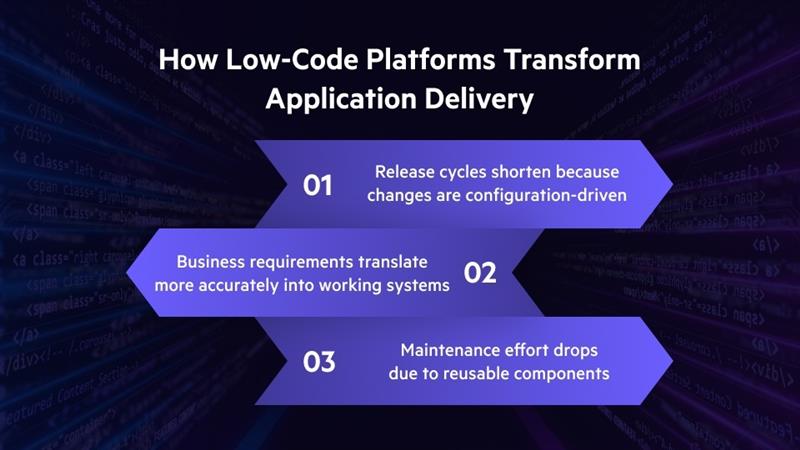
Release cycles shorten because changes are configuration-driven

In traditional environments, even small changes require development, testing, and deployment across multiple layers. Low-code platforms replace much of this effort with configuration and rule updates. So, enhancements move through the delivery pipeline more quickly, without waiting on lengthy development backlogs or extensive rework.

Business requirements translate more accurately into working systems

Low-code platforms allow business and IT teams to collaborate on the same visual models and workflows. For instance, Pega Blueprint provides a shared, AI-powered workspace that bridges communication gaps, accelerates the design process, and ensures alignment on a shared business goal.

Maintenance effort drops due to reusable components

Heavy custom code often becomes brittle over time, making systems harder to update and scale. Low code encourages the use of standardized components and centralized rules, reducing technical debt. In this way, systems are easier to maintain, upgrade, and extend, without introducing new risks with every change.

How EvonSys Delivered Personalized Omnichannel Engagement at Global Scale

A strong transformation strategy recognizes both internal efficiency and the need to create consistent, responsive customer experiences across channels. Learn how a global organization achieved 40% higher productivity by transforming customer experience with omnichannel solutions.

Moving Forward with the Right Strategy and Partner

Low code is a powerful accelerator for digital transformation, but its success depends on the expertise of the implementation partner. With the right partner, organizations can transform more quickly, mitigate risk, and develop solutions that evolve in tandem with their business.

EvonSys helps enterprises unlock the full potential of low-code digital transformation.

Heading 1

Heading 2

Heading 3

Heading 4

Heading 5
Heading 6

Lorem ipsum dolor sit amet, consectetur adipiscing elit, sed do eiusmod tempor incididunt ut labore et dolore magna aliqua. Ut enim ad minim veniam, quis nostrud exercitation ullamco laboris nisi ut aliquip ex ea commodo consequat. Duis aute irure dolor in reprehenderit in voluptate velit esse cillum dolore eu fugiat nulla pariatur.

Block quote

Ordered list

  1. Item 1
  2. Item 2
  3. Item 3

Unordered list

  • Item A
  • Item B
  • Item C

Text link

Bold text

Emphasis

Superscript

Subscript

Digital transformation is no longer a question of if, but a question of how well it’s achieved. Legacy systems, manual processes, and fragmented platforms slow progress and create risk. At this stage, once the strategy is defined, selecting the right digital transformation service provider becomes a priority. This is where an execution-led, low-code, and automation-driven approach becomes critical.

Choose EvonSys to Move from Strategy to Transformation

Enterprise digital transformation strategies may appear strong on paper and in discussions, but translating them into real, working solutions is where most initiatives often slow down. This is the stage where execution discipline, platform expertise, and delivery experience matter most.

The right partner helps organizations move beyond planning to enterprise-wide digital transformation. EvonSys offers stronger solutions, focusing on low-code implementation and automation-led delivery. By combining business process expertise with deep platform knowledge, EvonSys aligns technology decisions with operational priorities.

Enterprise Digital Transformation Through Low-Code Implementation

As a digital transformation service provider, EvonSys helps organizations leverage platforms such as Pega, Mendix, OutSystems, and Salesforce to accelerate transformation initiatives. Traditional transformation efforts often slow down due to lengthy development cycles, limited agility, and high maintenance overhead. Low-code platforms address these challenges by enabling visual development, reusable components, and rapid configuration.

The Impact of Enterprise Digital Transformation

Low code development enables developers and citizen developers to create applications using visual tools, drag-and-drop interfaces, and pre-built components.

Release cycles shorten because changes are configuration-driven

In traditional environments, even small changes require development, testing, and deployment across multiple layers. Low-code platforms replace much of this effort with configuration and rule updates. So, enhancements move through the delivery pipeline more quickly, without waiting on lengthy development backlogs or extensive rework.

Business requirements translate more accurately into working systems

Low-code platforms allow business and IT teams to collaborate on the same visual models and workflows. For instance, Pega Blueprint provides a shared, AI-powered workspace that bridges communication gaps, accelerates the design process, and ensures alignment on a shared business goal.

Maintenance effort drops due to reusable components

Heavy custom code often becomes brittle over time, making systems harder to update and scale. Low code encourages the use of standardized components and centralized rules, reducing technical debt. In this way, systems are easier to maintain, upgrade, and extend, without introducing new risks with every change.

How EvonSys Delivered Personalized Omnichannel Engagement at Global Scale

A strong transformation strategy recognizes both internal efficiency and the need to create consistent, responsive customer experiences across channels. Learn how a global organization achieved 40% higher productivity by transforming customer experience with omnichannel solutions.

Moving Forward with the Right Strategy and Partner

Low code is a powerful accelerator for digital transformation, but its success depends on the expertise of the implementation partner. With the right partner, organizations can transform more quickly, mitigate risk, and develop solutions that evolve in tandem with their business.

EvonSys helps enterprises unlock the full potential of low-code digital transformation.

Related Articles

Understanding Digital Transformation and the Challenges Businesses Face

Read More
February 17, 2026

Putting Members in Control: How Digital Self-Service Is Transforming Pension Engagement

Read More
February 17, 2026

Understanding the Impact of Business Operations Without Digital Transformation

Read More
February 13, 2026